
Anton Corbijn — Shadow, Noise, and the Birth of Modern Music Identity
Long before musicians carefully curated their image through Instagram feeds and branding teams, Anton Corbijn helped define what modern music mythology could look like. His photographs did not simply document artists — they transformed them into symbols. Through grain, shadow, harsh contrast, desaturated tones, and emotional distance, Corbijn created a visual language that became inseparable from the sound of entire generations of music.
Few photographers have shaped the identity of popular music as profoundly as he did.
Emerging from the Netherlands during the late 1970s and early 1980s, Anton Corbijn arrived at a moment when post-punk, alternative music, and new wave culture were searching for a different kind of imagery. The glossy perfection of traditional celebrity photography no longer matched the darker emotional atmosphere of the music itself. Bands were becoming more introspective, more fragmented, more psychologically complex, and Corbijn instinctively understood that photography needed to evolve alongside them.
His images often felt windswept, lonely, imperfect, and strangely cinematic. Musicians appeared isolated within empty landscapes, swallowed by shadows, standing beneath overcast skies or caught inside harsh directional light that seemed to expose something vulnerable beneath the performance itself. Rather than making artists appear glamorous in a conventional sense, Corbijn gave them mystery, fragility, tension, and mythological scale.
Perhaps no collaboration illustrates this more clearly than his relationship with Depeche Mode. Over decades, Corbijn became almost inseparable from the visual identity of the band, shaping everything from album covers and promotional imagery to music videos and stage design. The melancholic emotional architecture of Depeche Mode’s music found its perfect visual counterpart in Corbijn’s stark black-and-white photography and desaturated cinematic imagery. It is difficult today to separate how the band sounds from how Corbijn made them look.
His influence extended far beyond a single group. Corbijn helped define the visual mythology surrounding artists such as U2, Joy Division, Nick Cave and the Bad Seeds, Nirvana, Tom Waits, and R.E.M.. His photographs became part of the emotional identity of the music itself. The imagery was not promotional decoration surrounding the records; it became part of how listeners experienced the artists emotionally and culturally.
A major reason Corbijn’s work felt so distinctive was his rejection of technical perfection. Much of his photography embraced grain, harsh texture, imperfect focus, blown highlights, deep shadows, and heavily atmospheric printing techniques. He understood that emotional truth often emerges through imperfection rather than clarity. The photographs felt tactile and physical, as if the surfaces themselves carried emotional weight.
One process closely associated with the darker tonal atmosphere of his black-and-white work was lith printing, often referred to simply as LITH printing. Unlike traditional black-and-white darkroom printing, lith development produces unstable chemical reactions that create gritty contrast, infectious grain structures, warm shadow tones, and unpredictable tonal separation. Blacks become denser, highlights glow differently, and textures begin to feel almost sculptural. The process introduces a kind of beautiful instability into the image, where control and accident coexist simultaneously. Corbijn used these imperfect tonal qualities to amplify emotional tension rather than reduce it.
At the same time, parts of his color work explored similarly unstable territory through cross processing techniques. By intentionally developing film in the “wrong” chemical process, photographers could create distorted color shifts, polluted greens, dirty yellows, cyan shadows, exaggerated contrast, and unpredictable saturation. Cross processed images often felt chemically damaged in the most beautiful way possible, producing colors that appeared emotionally heightened rather than realistic. Corbijn embraced these qualities because they pushed photography further away from polished commercial aesthetics and closer to atmosphere, memory, and emotional fragmentation.
What made Corbijn so influential was not simply his technical style, but his understanding that musicians needed visual worlds, not just portraits. He built emotional universes around artists. In many cases, the identity of entire bands became inseparable from the visual atmosphere he created for them. The lonely highways, industrial landscapes, grain-heavy monochrome portraits, and chemically unstable colors all became part of the mythology surrounding alternative music culture throughout the 1980s and 1990s.
Today, the influence of Corbijn can still be felt everywhere within music photography, fashion editorials, independent cinema, luxury campaigns, and contemporary digital editing culture. The grain-heavy monochrome portrait, the desaturated cinematic palette, the imperfect flash, the emotionally distant composition — all of these visual languages have roots in the atmosphere he helped define decades earlier. Yet much contemporary work imitates only the surface of the aesthetic without fully understanding why the images originally felt so powerful.
This fascination with the tactile darkness of lith printing and the unstable color language of cross processing became part of the foundation behind the development of or packs LITH & Cross Process. The collections was shaped around some of the emotional characteristics that made these analog techniques so visually enduring: dense blacks, textured grain, restrained highlights, contaminated color shifts, atmospheric contrast, and the feeling that the image itself carries physical depth rather than digital perfection.
The ambition behind LITH & Cross Process was not simply to imitate the past, but to recover some of the emotional weight that analog imperfection once gave to photography — the sense that shadows could feel cinematic, colors could feel unstable, and portraits could carry the quiet psychological tension that defined so much of Anton Corbijn’s visual world.
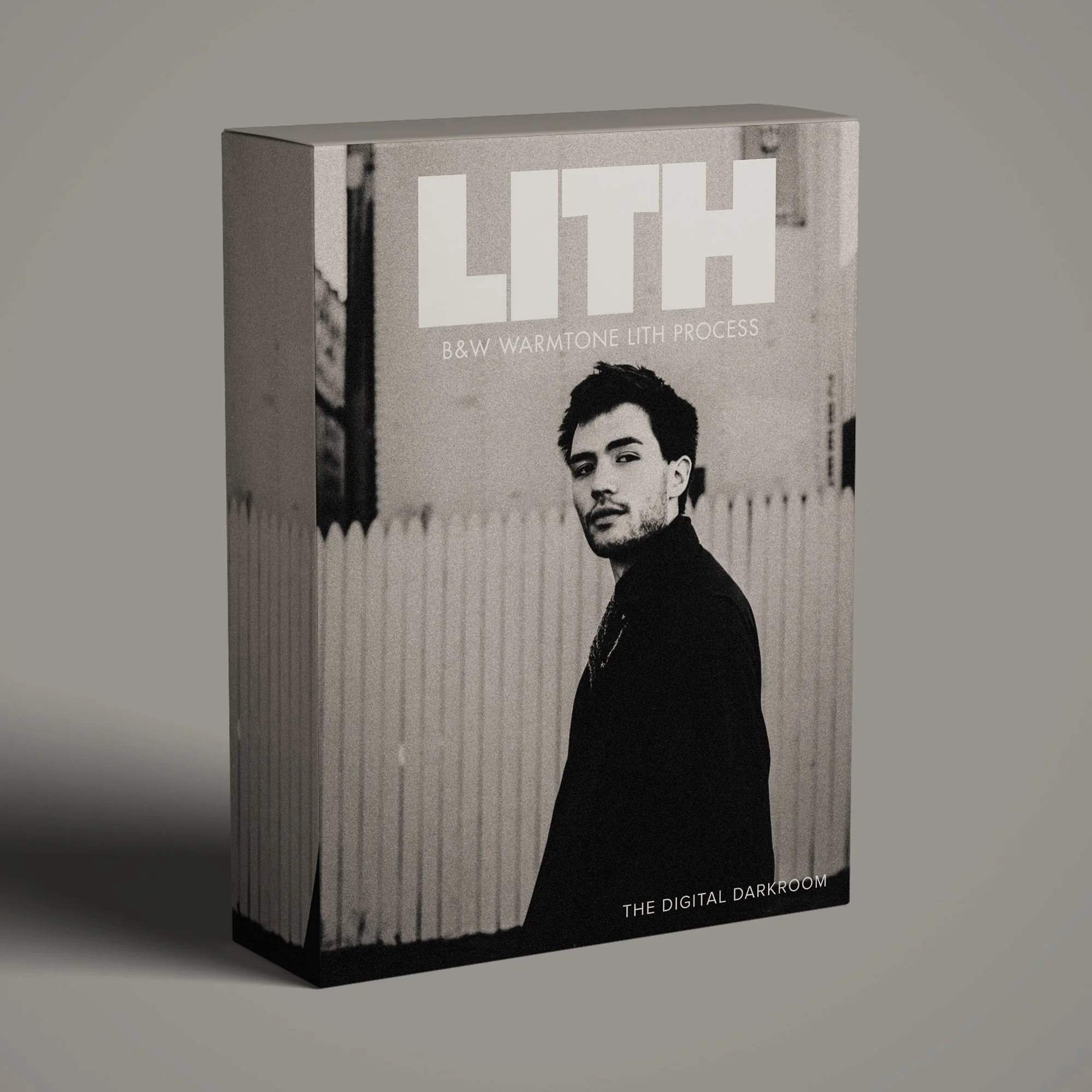
B&W Warmtone Lith Process. - a complex process based on a lithographic developer, creates this unique visual look. Lith printing - the holy grail for many photographers spending weeks in the darkroom trying to figure out the secret recipe. Hard black shadows, warm creamy highlights and generous amount of sharp grain.
We are so proud to announce our own take on Lith printing - our preset LITH gives you a fantastic tool for creating images that really stand out from the rest. Our preset pack is based on a handcrafted and well-tested LUT profile, an effect that can not be created in Lightroom alone.
Remember: Since our Lith profile is a color profile (in order to get right overlay color effect) it is not recommended to use the profile slider for changing the profile effect. Use instead the exposure and contrast sliders to get the right amount of the effect.
What is in the pack?
1 Lith profile
14 presets
5 Grain structures
4 Warm tones
Remember - No preset can give you a perfect result with one click - depending on your camera, exposure, light, and composition the result will differ. Use the different tools inside Lightroom to adjust exposure and contrast and you will have a great result.
IMPORTANT NOTICE This Lightroom presets is compatible with Adobe Lightroom versions of:
Adobe Lightroom CC
Adobe Lightroom Classic
Adobe Photoshop CC (Camera Raw filter)
Adobe Lightroom Mobile App (you will need a Creative Cloud subscription to import the profiles. You can do this by importing through the Lightroom CC desktop app and they will appear in your mobile app)
Please make sure you have the correct software before your purchase - refunds can NOT be given for digital downloads. Also, make sure to update your Lightroom to the latest version, so it can handle the included profile. (Older versions of Lightroom might have problems finding profiles).
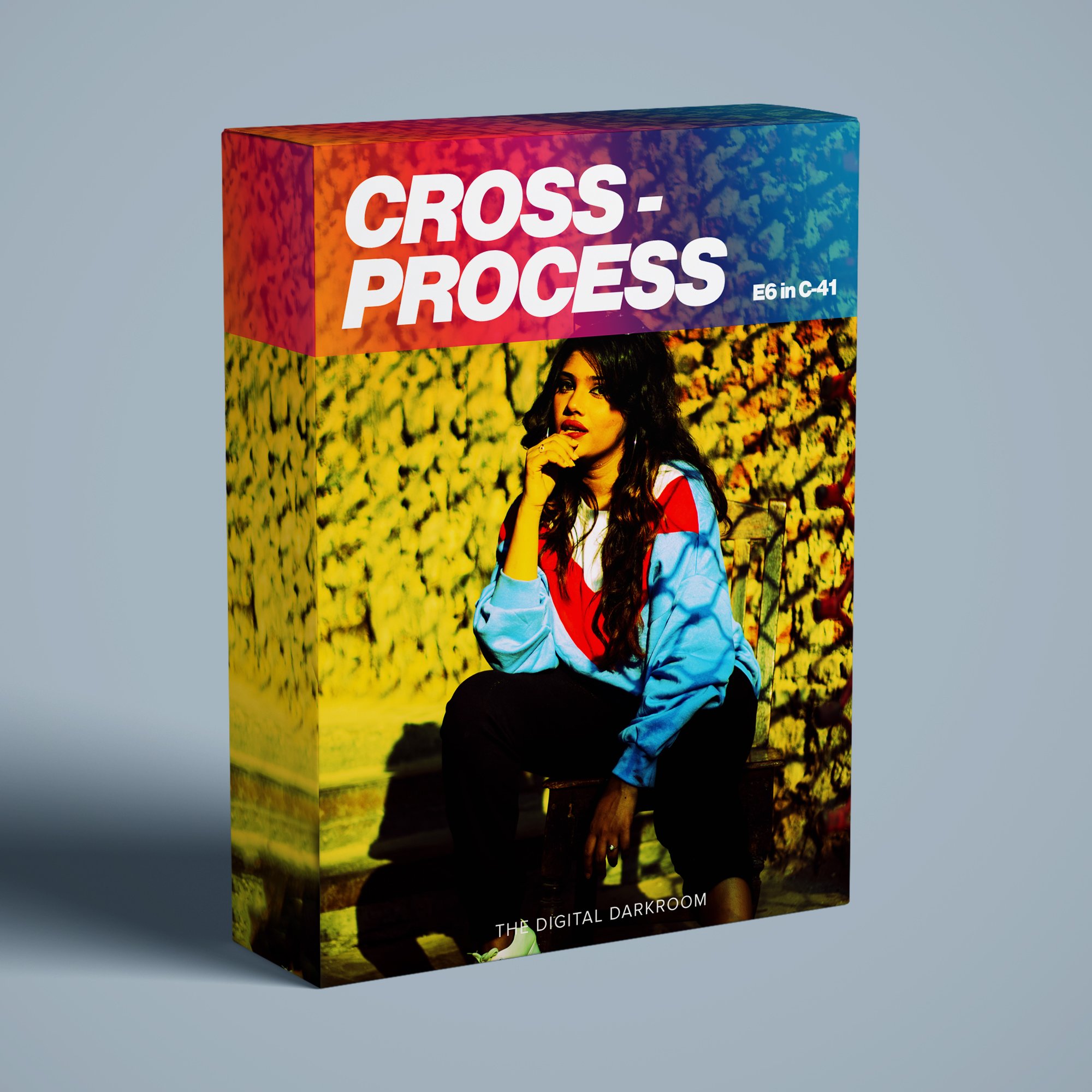
Cross Processing is the process where the photographer intentionally processing the film in the wrong chemicals, creating interesting and unpredictable color shifts and increased contrast. Used widely during the 90´s by fashion and music photographers. This set of profiles and presets imitates the effect of shooting slidefilm (E6) developed in C-41 (negative developer).
What is in the pack?
3 unique cross process profiles
15 custom presets
3 grain presets
Remember - You can adjust the amount of profile effect by pulling the profile slider in the develop panel (at the top). No preset can give you a perfect result with one click - depending on your camera, exposure, light, and composition the result will differ. Use the different tools inside Lightroom to adjust exposure and contrast and you will have a great result.
IMPORTANT NOTICE This Lightroom presets is compatible with Adobe Lightroom versions of:
Adobe Lightroom CC
Adobe Lightroom Classic
Adobe Photoshop CC (Camera Raw filter)
Adobe Lightroom Mobile App (you will need a Creative Cloud subscription to import the profiles. You can do this by importing through the Lightroom CC desktop app and they will appear in your mobile app)
Please make sure you have the correct software before your purchase - refunds can NOT be given for digital downloads. Also, make sure to update your Lightroom to the latest version, so it can handle the included profile. (Older versions of Lightroom might have problems finding profiles).